

Buddha Purnima 2026 is no longer just a traditional observance; it is a digital phenomenon. With the global spiritual supplies market surging toward USD 17.4 billion by 2032, and the broader spiritual products industry expected to reach USD 193.7 billion in 2026, the demand for high-fidelity sacred art has never been higher.
Generic AI art often misses the mark in Buddhist spaces because it distorts faces, hands, and symbols. Legacy models often fail to interpret the Dhyana mudra, resulting in “uncanny valley” distortions that offend practitioners. While Midjourney and DALL-E 3 are powerful, they lack the cultural guardrails required for sacred geometry and hand anatomy. Let’s break down the exact symbols and tools to use.
What is Buddha Purnima and Why Does It Matter?
A bright spring full moon is the day’s core image. That marks the Vaishakha month. Buddha Purnima, sometimes known as Vesak or Buddha Jayanti, anchors the entire Buddhist calendar. It is quiet, but it carries real weight. Millions observe this night because it features three major events. It honors Siddhartha Gautama’s birth, his awakening beneath the Bodhi tree, and his final passing into Parinirvana. Three lifetimes of meaning packed into a single day.
To really understand the Buddhist holiday, look at what people actually do. The Buddha Purnima celebration is deeply physical and highly personal:
-
Washing the baby Buddha statue symbolizes a clean start.
-
Lighting oil lamps stands for wisdom overcoming darkness.
-
Leaving fresh flowers on an altar is a gentle nod to how quickly time passes.
-
Sitting in silent meditation brings a chaotic mind back to the center.
Making art without knowing this history is like building a house without checking the foundation. It just feels hollow. If you are generating AI imagery for Buddha Purnima, context changes your entire approach.
A glowing lamp isn’t just a random lighting trick. A lotus isn’t a floral filler. Warm, flickering shadows carry a completely different emotional weight than sterile neon glare. When you grasp the actual tradition of Bodhi Day, your images stop looking like generated pixels. They feel honest.
Start your art journey with a1.art.
How to Use It, Just 3 Steps:
Using a1.art is incredibly simple. Here’s the full beginner-friendly guide:
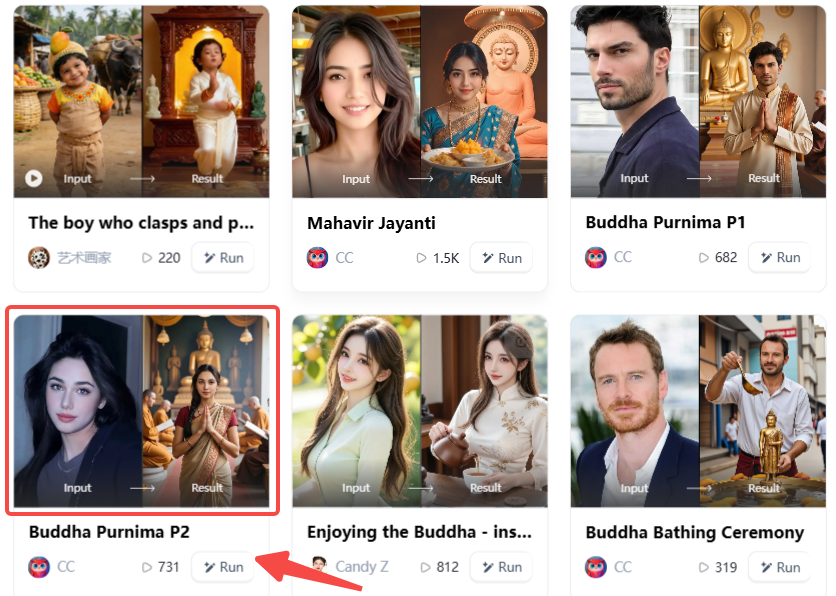
Step1:
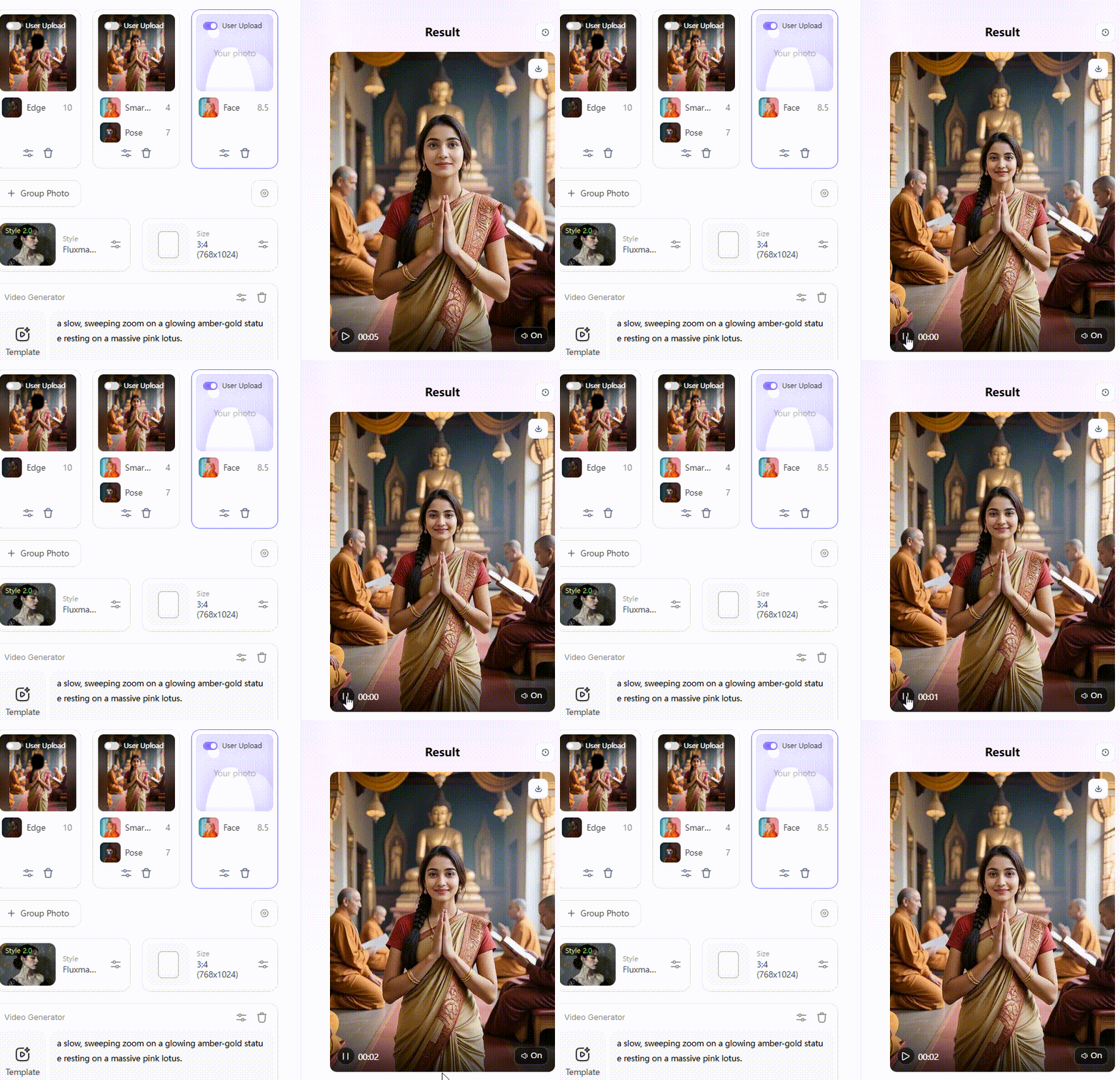
Open a1.art, choose the App that you are interested in, then click 「Run」
Click on the image to experience the same App👇
Step2:
Upload a photo/image
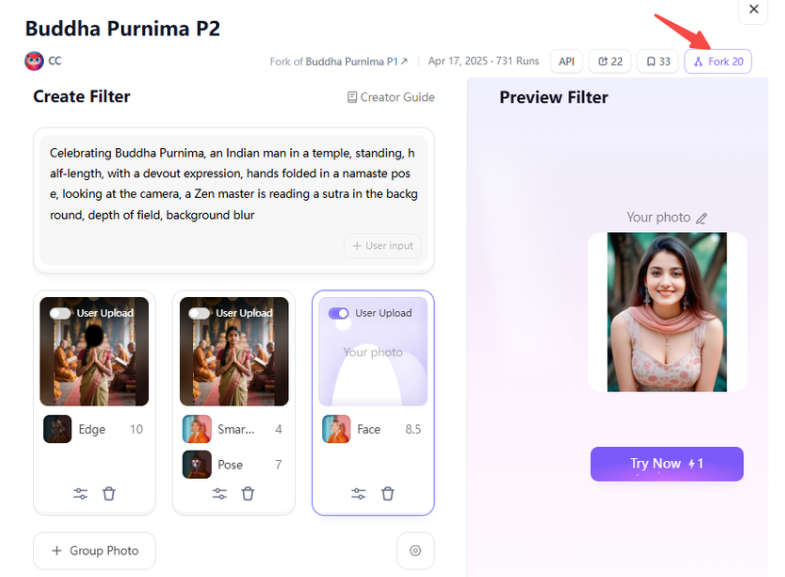
Step3:
Wait 3 seconds, you will get a wonderful result 👇
Essential Visual Elements for Vesak-Specific Symbolism
Creating true spiritual Buddha Purnima art means using symbols effectively. If you want your art to reach real believers, accuracy is everything. Build your Buddha Holy Days art with these steps:
First, choose the right elements for your prompt. These symbols are must-haves for your scene:
-
Use a Golden Buddha Statue: Gold means divine light in warm amber tones. Neon yellow often looks harsh and artificial.
-
The Lotus Flower: This flower grows from mud to show pure life. Place it under the statue.
-
The Bodhi Tree: The Buddha found peace under this tree. Its rich green leaves make a beautiful background.
-
The Full Moon (Purnima): This is the core of the holiday. Use a huge, bright moon to light up the scene from behind.
-
Mudras (Hand Gestures): Standard AI tools often draw ugly, extra fingers. To fix this, use the Dhyana mudra.
Next, compare your options. A normal AI tool might warp these symbols. However, some cost-effective filters can map these shapes perfectly. For instance, the Buddha Purnima filter is more reliable for mudras and faces than generic generators.
Finally, do not crowd your Happy Buddha Purnima image. The best art breathes. Pick just two symbols. Let the warm light and calm face do the hard work.
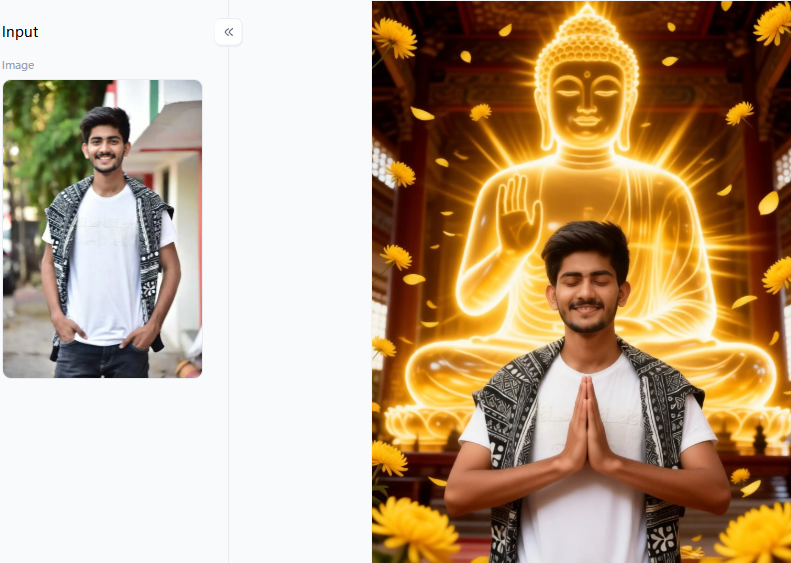
Click the picture to generate your exclusive buddha's auspicious day with one click👇
Trending AI Art Styles for Golden Buddha Themes
For Vesak 2026, three Golden Buddha art styles stand out from the crowd. Each one tells a different story. Each one also fits a different platform, mood, and viewer. So, if you want your work to feel fresh, respectful, and easy to share, start with a style that aligns with your goal.
Radiant Enlightenment
This is the brightest and most dramatic look. It shows a glowing golden Buddha statue wrapped in warm cosmic light. As a result, it works especially well on Instagram, where bold light and rich gold tones stop the scroll in its tracks.
-
The Vibe: Majestic, cinematic, awe-filled.
-
Best For: Grid posts, posters, and phone wallpapers.
Buddha Purnima is a must-have filter because it keeps the face clear while the light stays soft and rich. Many cheap tools blow out the highlights and make the skin look flat. By contrast, this filter gives you an amber glow, clean contours, and a polished finish with low effort.
Meditation in Stillness
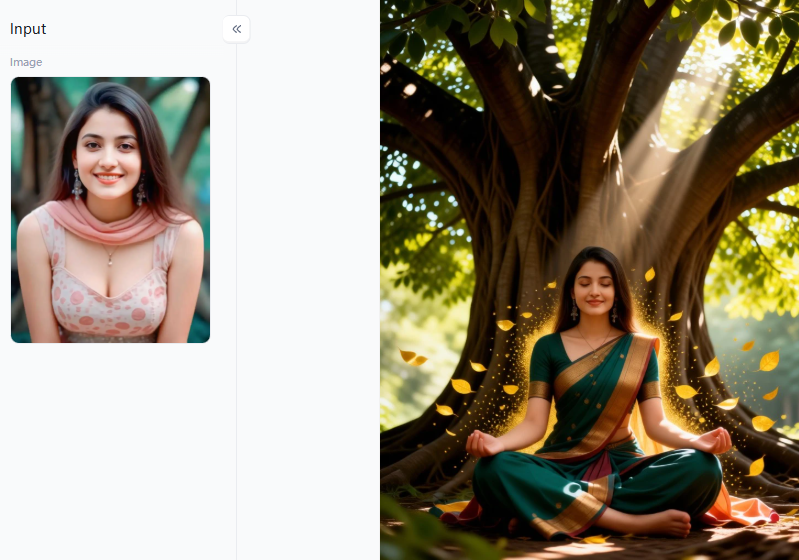
This style takes the opposite path. It uses mist, dawn light, and quiet nature. Therefore, it feels calmer and more grounded, which is why audiences on Reddit and in mindfulness respond so well to it.
-
The Vibe: Peaceful, mindful, natural.
-
Best For: Pinterest, blogs, and reflective posts.
Use the Enjoying the Buddha or Buddha’s Auspicious Day filters for soft shadows, gentle highlights, and a prayerful mood. For example, if you are creating a morning meditation post, these filters feel more honest than flashy gold effects.
The Cosmic Buddha
This style feels bigger, bolder, and more modern. It mixes galaxies, stars, and vast water scenes to suggest infinite peace. Because of that, it shines on Reels, Shorts, and TikTok.
-
The Vibe: Expansive, surreal, modern.
-
Best For: Short-form video and motion posts.
The Buddha Purnima Couple Photo filter works well when you want to place people into the scene without odd body shapes or broken edges. In short, if you want fast, cost-effective, high-impact results, these three filters are the smart place to begin.
Click the picture to generate your exclusive buddha's auspicious day with one click👇
Why a1.art is the Best AI Generator for Buddha Purnima
I have tested dozens of platforms for cultural and religious art. Without a doubt, a1.art consistently wins. This platform is useful for speed and structure, but it is best understood as a specialized tool rather than a universal solution for the Buddha Purnima date. Standard tools often warp faces and bodies, which can deeply offend believers. However, a1.art solves this completely.
Here is exactly why this platform is faster, clearer, and safer for cultural art:
-
It utilizes a 5-second generation cycle, enabling rapid-fire A/B testing of 2700K warm-amber lighting profiles.
-
A large filter library gives users more room to match tone, style, and ceremony context.
-
It permanently solves the “extra limbs” problem that ruins sacred art.
-
Grab a perfect, clear picture from a moving video by deleting your "Video Generator."
For practical examples, try the Mahavir Jayanti Family Dinner and Buddha Bathing Ceremony filters. These specific scenarios handle complex actions, such as pouring water or holding a lotus flower, without the bizarre warping seen in other apps. Ultimately, a1.art is the most cost-effective and respectful way to bring your vision to life.
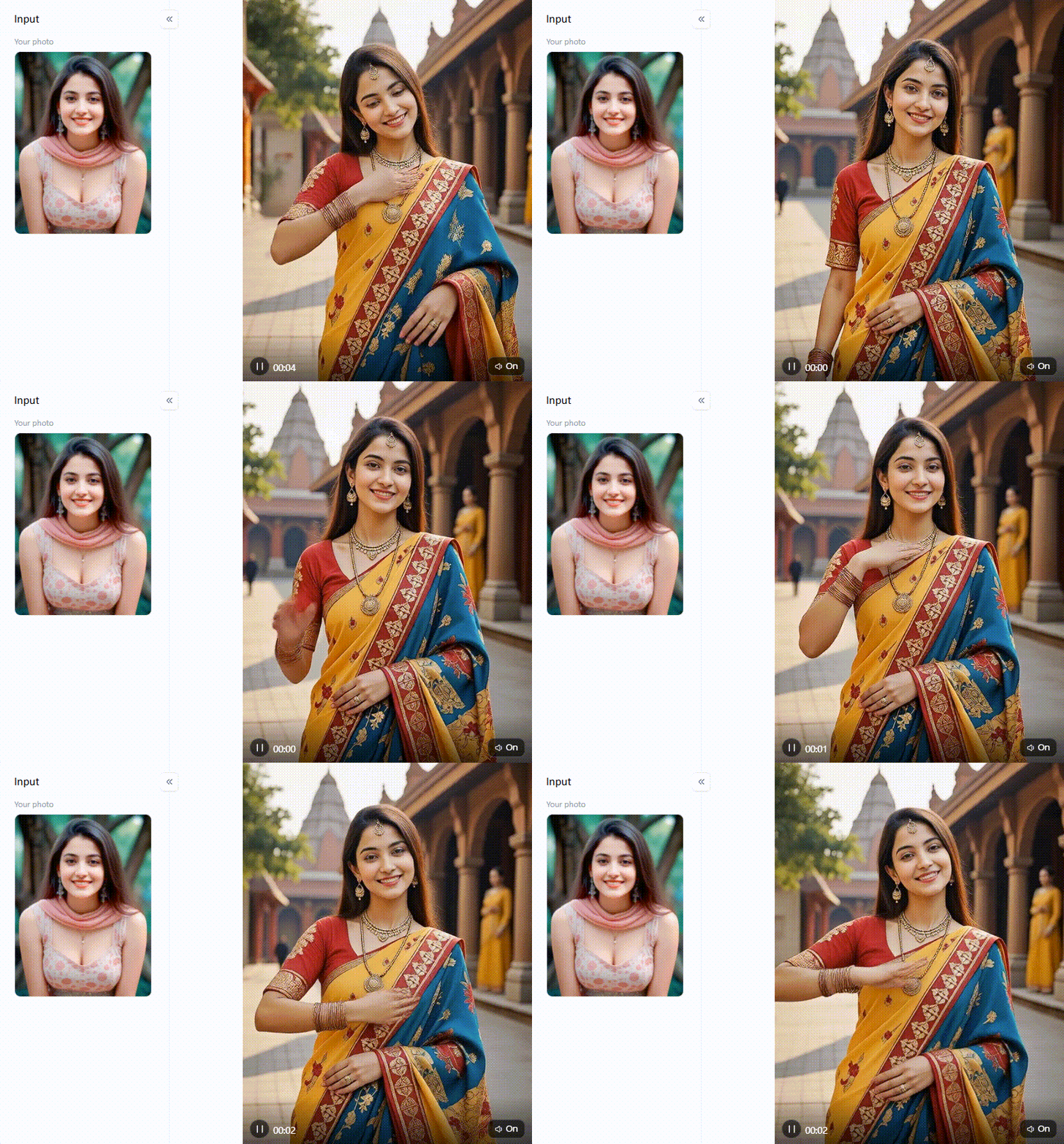
Click the picture to generate your exclusive indian dance with one click👇
Prompt Ideas to Make Your Golden Buddha Art Go Viral
Typing “Gold Buddha” into a text box is a dead end. You get flat, lifeless pixels. To make your Golden Buddha art actually grab attention, you have to feed the system real sensory details. Think like a painter. Use a tight, reliable formula:
[Golden Buddha] + [Dhyana Mudra] + [2700K Amber Glow] + [Bodhi Tree Background] + [85mm lens, f/1.8]
Let’s look at two ways to play this:
-
Traditional Strategy: Golden Buddha statue in Dhyana mudra, centered symmetry, warm 2700K oil lamp lighting, Bodhi tree canopy, full moon backlight, brushed gold texture, 85mm lens, shallow depth of field, photorealistic
-
Innovative Strategy: Request a slow, sweeping zoom on a glowing amber-gold statue resting on a massive pink lotus. Put that lotus in a dark midnight lake. Backlight the whole thing with a bright full moon and floating mist. It demands attention instantly.
Sometimes you generate a beautiful, moving video but realize you need a still frame. Delete the “Video Generator” icon instantly rips a clean, high-res photo straight from your video.
Creating a Mindful Purnima Buddha Aesthetic
Digital art shouldn’t just live on a server. It belongs in your physical space. Right now, people are actively crafting a Purnima Buddha aesthetic they can live with every single day.
Grab your phone. Take a raw, well-lit photo of an empty desk or that quiet corner in your bedroom. Upload it and run the Enjoying the Buddha filter. The system actually reads the shadows and light bouncing around your room. It then drops a golden statue or a soft lotus directly into that space. It looks like it is sitting right on your table.
Different rooms need different touches. Tiny spaces do better with minimal lotus overlays. Big, airy rooms can handle richer tones and incense-style halo effects. Compare a few outputs before deciding.
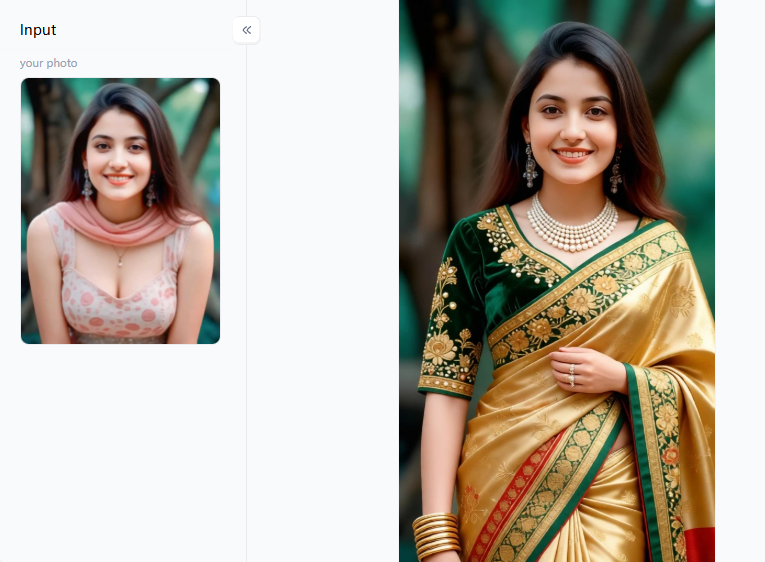
Click the picture to generate your exclusive golden sari with one click👇
Elevate Your Purnima Buddha Creations Today
Buddha Purnima 2026 deserves more than cheap, warped AI images. Extra fingers and melted faces insult the holiday. By leveraging accurate symbols and the sharp, cost-effective filters in a1.art, you create something that commands respect. Fast five-second generation speeds and the clever Fork tool keep the process fluid. Skip the generic trash this year. Build something honest.
FAQs about Purnima Buddha
Q: Why do we celebrate Buddha Purnima?
Think of it as a Triple Anniversary. Vesak commemorates the birth, Enlightenment, and Parinirvana (passing) of Siddhartha Gautama. All three milestones hit the same spring full moon. For millions, it acts as a massive, global pause button for the mind.
Q: What should be done on Buddha Purnima?
People show up at temples early. They sit. They breathe. The most striking tradition is pouring sweet, scented water over a tiny statue of the baby Buddha. It works like a physical reset, washing away the grit of the year. Families also light small oil lamps to chase out the dark, give away food, and stick to a quiet, vegetarian diet.
Q: How to create high-quality Buddha Purnima AI art?
Generic image generators butcher cultural art. They guess. To get it right, lean on a dedicated tool like a1.art. Pick a specific cultural filter and feed it a rigid prompt. Call out the exact hand gestures, mudras, and ground the scene with a lotus. Pinning down these details stops the machine from hallucinating extra fingers.
Q: What did the real Buddha look like?
No contemporary portrait of the Buddha survives. No one sketched him while he lived. The classic Buddha Purnima statues we recognize today only appeared centuries later in Gandhara, blending local stone carving with heavy Greek influence. Those long earlobes and that bump on his head? Pure symbolism. Artists carved them to convey the weight of his wisdom in physical form.
Q: Why is AI art controversial in Buddhist communities?
Extra limbs or warped poses can feel disrespectful in enlightened Buddhist contexts. Generating a warped Golden Buddha feels cheap and disrespectful to anyone who actually practices faith. If you make this kind of art, you must use a structurally sound engine like a1.art to lock in anatomy. Doing it right honors tradition instead of turning it into a bad cartoon.
Read more
- 10 Best Porn Text to Image AI Generators in 2026 (Uncensored)
- 10 Best AI Hentai Maker Tools for Uncensored Image Generation
- How to Have the Best Adult AI Chat Experience in 2026
- How to Create Realistic Styles AI Indian Girlfriend Images in 2026
- Top GPTGirlfriend AI Tools to Create NSFW Images in 2026
- 15+ Best NectarAI Alternatives in 2026 for Custom AI Companions
- Best GoLove AI Alternatives for NSFW AI Companions
- Best RPRP AI Alternatives for Uncensored NSFW Options in 2026
- How to Create Mult Porn Style Videos with AI in 2026
- How to Generate Asian Massage Porn with AI in 2026
Written by

a1.art
Published on
May 7, 2026
Share article


